Product testing
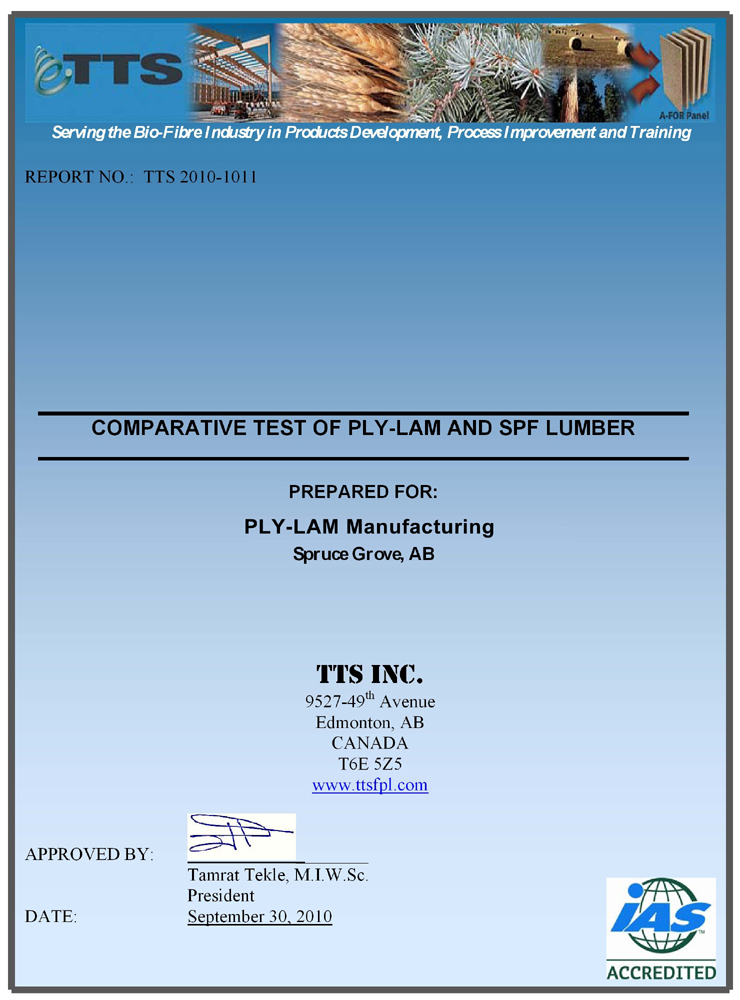
These pages are taken directly from a product testing report on Ply-Lam conducted by TTS Inc.
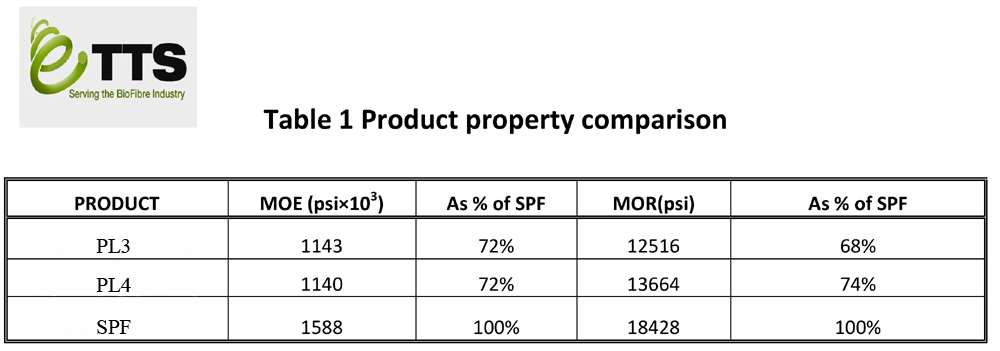
Modulus of elasticity (MoE) and modulus of rupture (MoR)
The MoE and MoR of PL3 and PL4 compared with SPF (spruce, pine, fir).
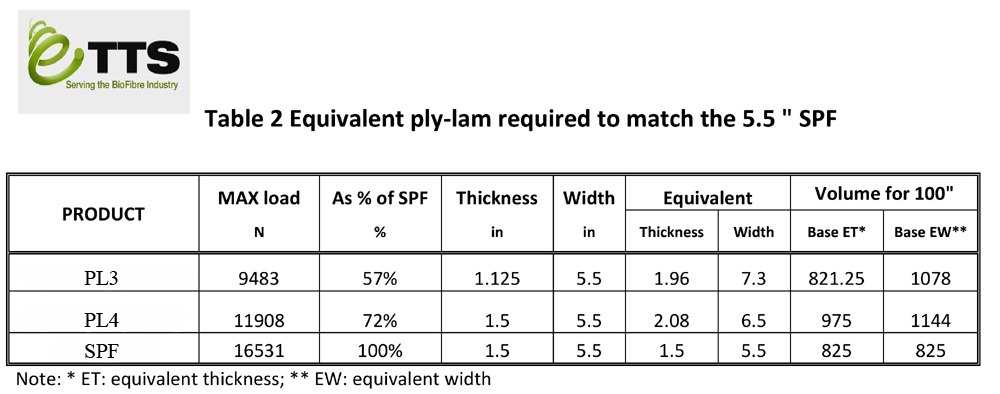
Ply-Lam needed to match 5.5 in SPF
The maximum load of PL3 and PL4, and the size of Ply-Lam needed to replicate a 5.5 in SPF board. A small increase in thickness and width matches the strength of SPF.
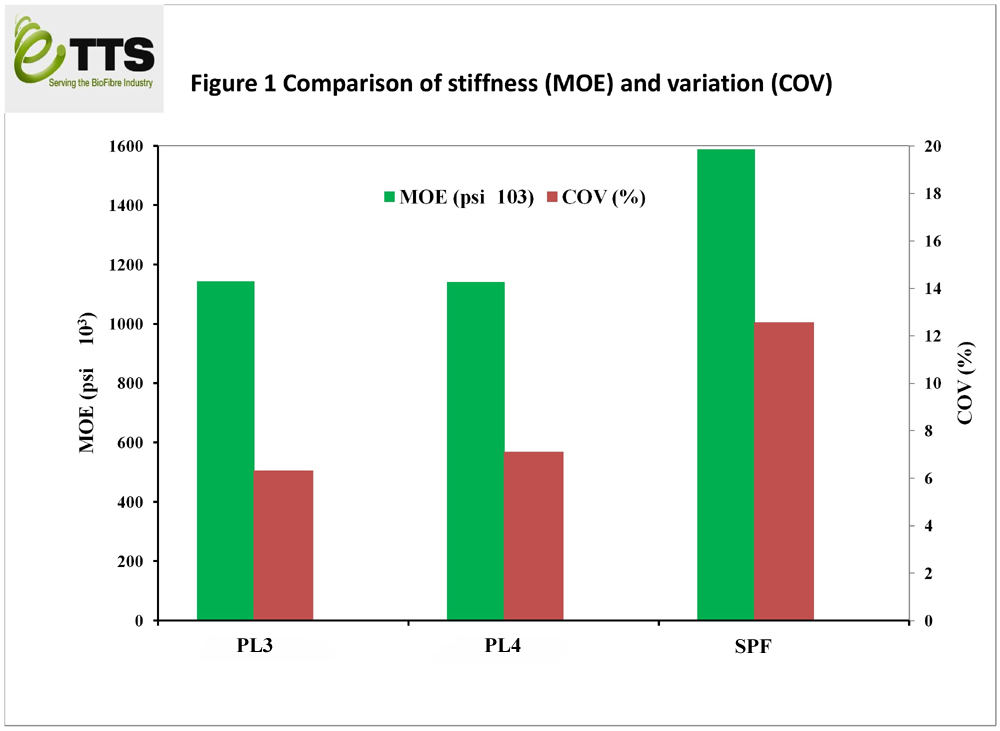
Stiffness (MoE) and variation (CoV)
Ply-Lam's variation is much smaller than normal SPF. SPF can vary widely in MoE, which means a wide range of stiffness. Ply-Lam does not, so it is a more consistent product.
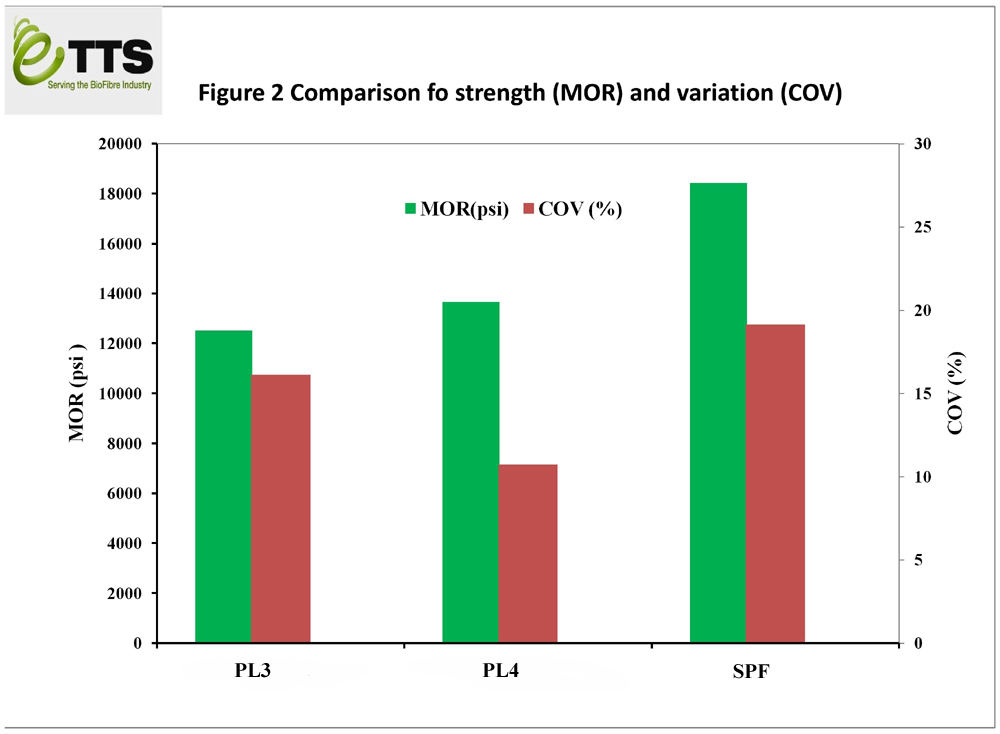
Strength (MoR) and variation (CoV)
Ply-Lam's variation in strength is smaller than normal SPF, which can vary widely in MoR.
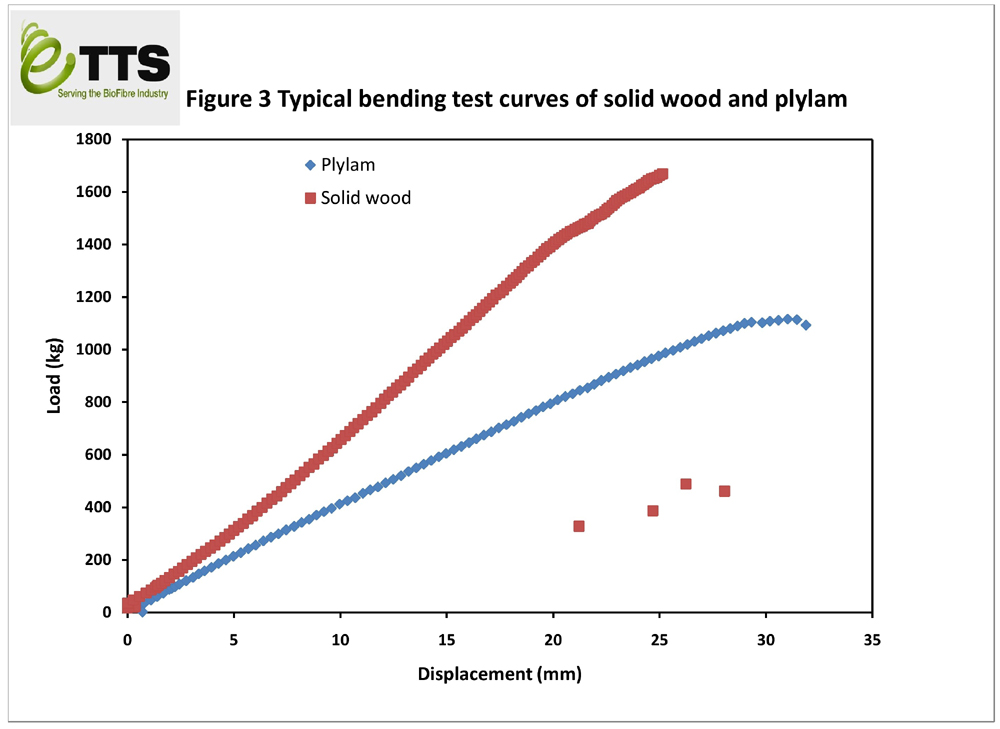
Typical bending test curves, solid wood vs Ply-Lam
Five separate tests each of standard SPF and Ply-Lam. SPF bends with high variability; Ply-Lam does not.
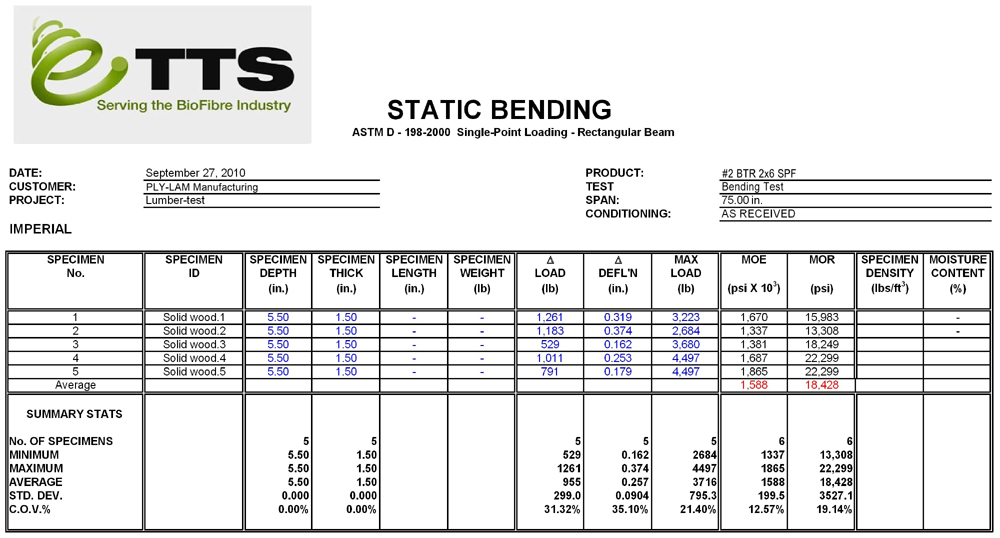
Static bending, single point loading: SPF (imperial)
Five tests of standard SPF. The weakest piece of lumber broke at half the load of the strongest.
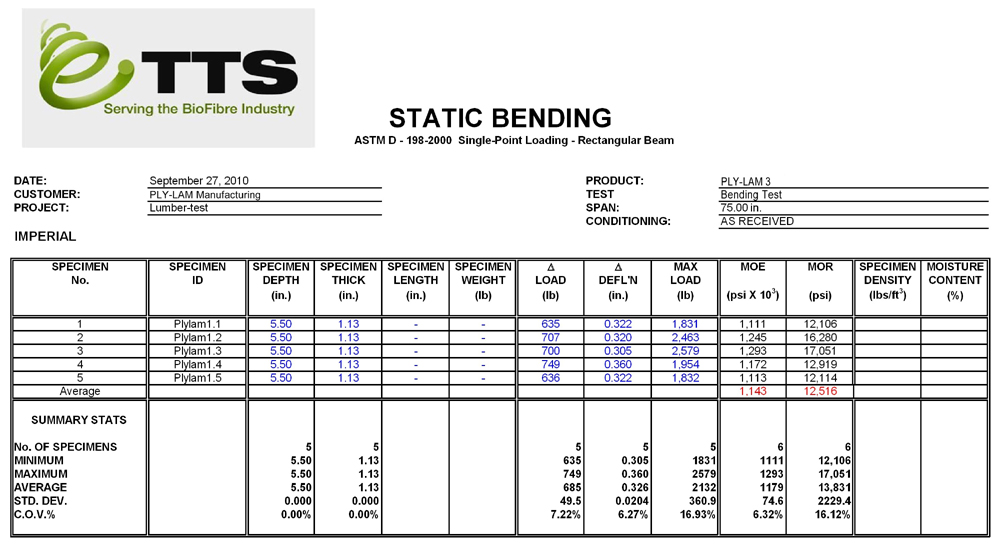
Static bending, single point loading: PL3 (imperial)
Five tests of PL3, showing consistent results.
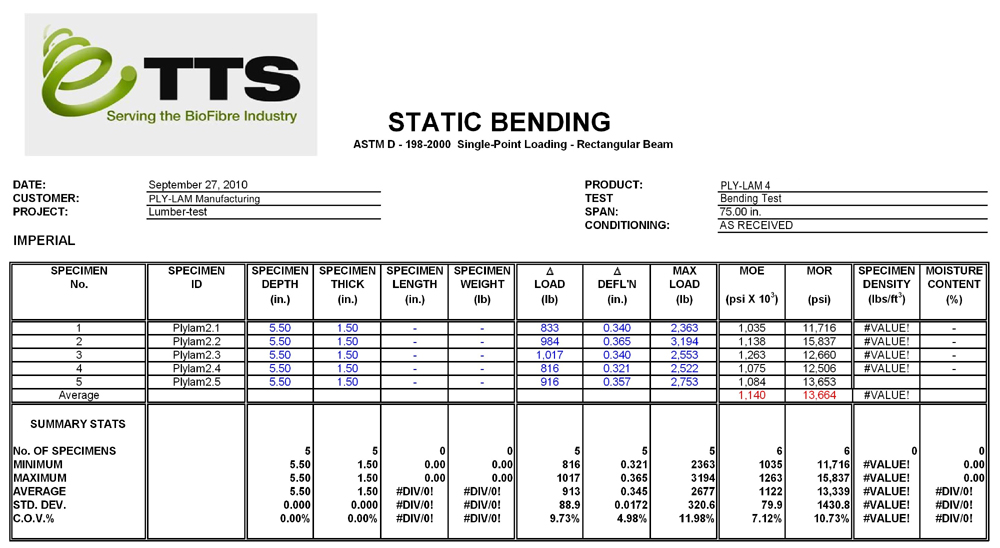
Static bending, single point loading: PL4 (imperial)
Five tests of PL4, showing consistent results.